

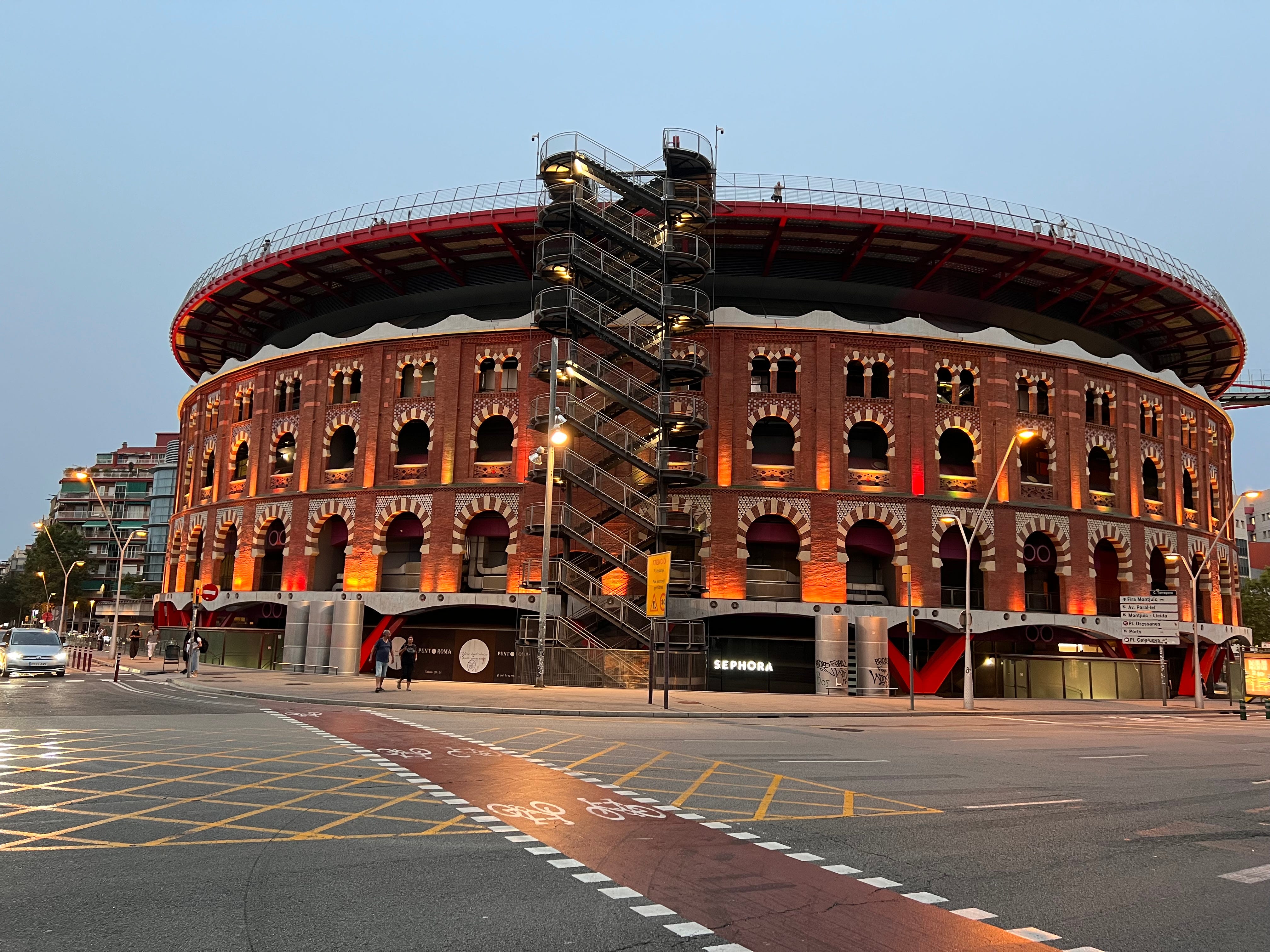
This is an essay I wrote and entered in a writers’ competition in November last year, 2025, not long after we got back from a two-month trip around Europe. The brief for the competition was simple - write about your experience that relates to the zeitgeist of 2025. I chose travel, technology and beauty. Writing this essay would also help me integrate a constant flow of novel yet historical man-made artistic and architectural creations while travelling through Europe in 2025
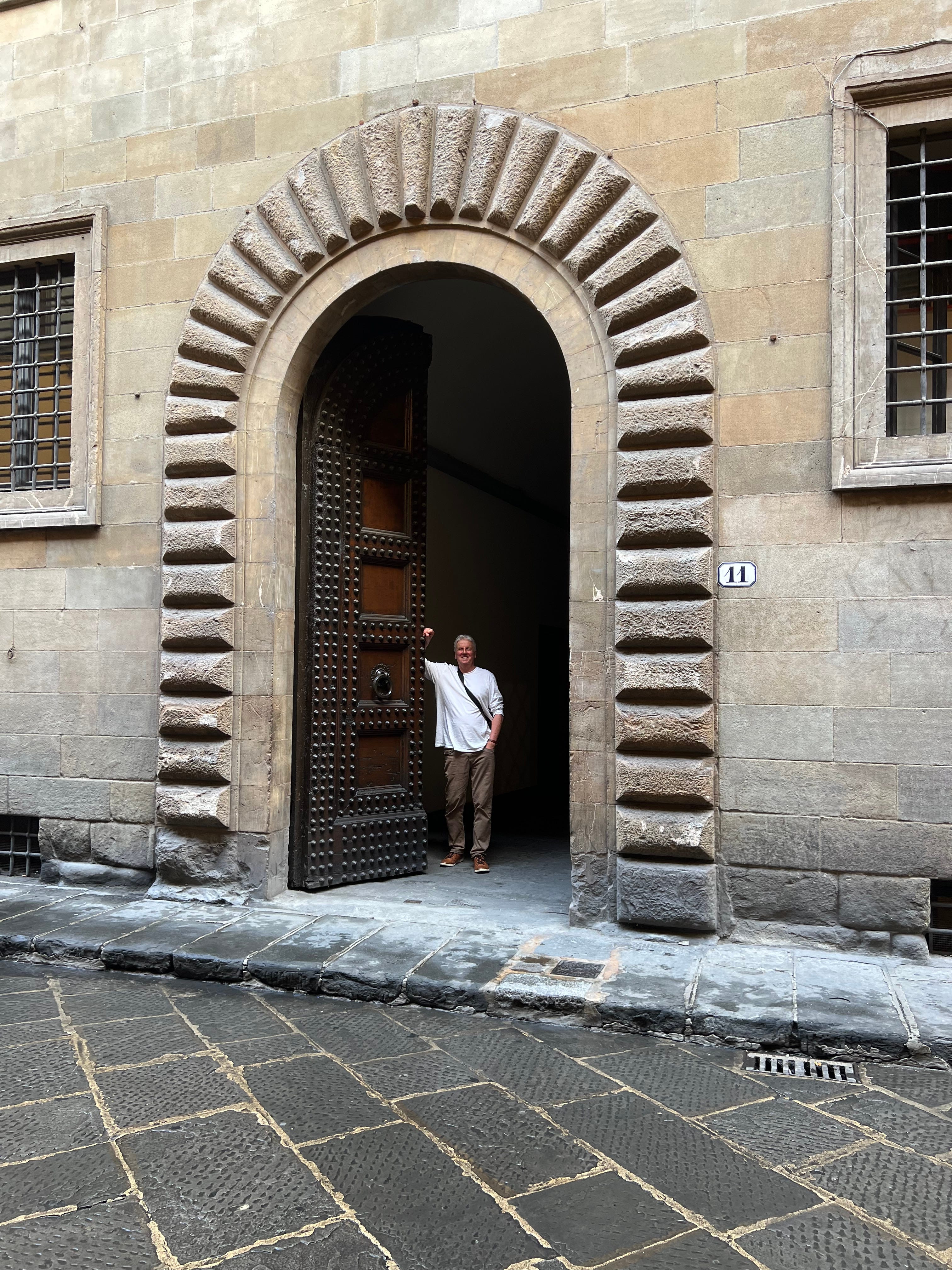
Travel, a feast, a degustation if you like, not so much of food but rather a parade of novel sights imbued with beauty and awe, mostly incomprehensible yet the doorways passed through on the way often evoke new lifetime memories and awaken interests in local culture and so much more. My name is Hartmut, while some of my friends and family call me Hart. The man mentioned in this essay is, of course, me. I hope you enjoy the essay.
This is a story of a young man of 72, who, in August of 2025, decided to step though a doorway that led to a once in a lifetime event. The event lasted two months and was fuelled by travel to lands of his birth, not visited since he came to Australia from Europe when he was only three.
It all began early one morning when the first doorway was transitioned, a brief journey inward, that had been taken many times before and, in many ways, defogged consciousness and freed the man of cognitive unwanted clutter and baggage in preparation for the day and journey ahead. This then led to stepping through the next doorway, the front door of his house as a taxi was waiting outside to take him and his friend to the airport.
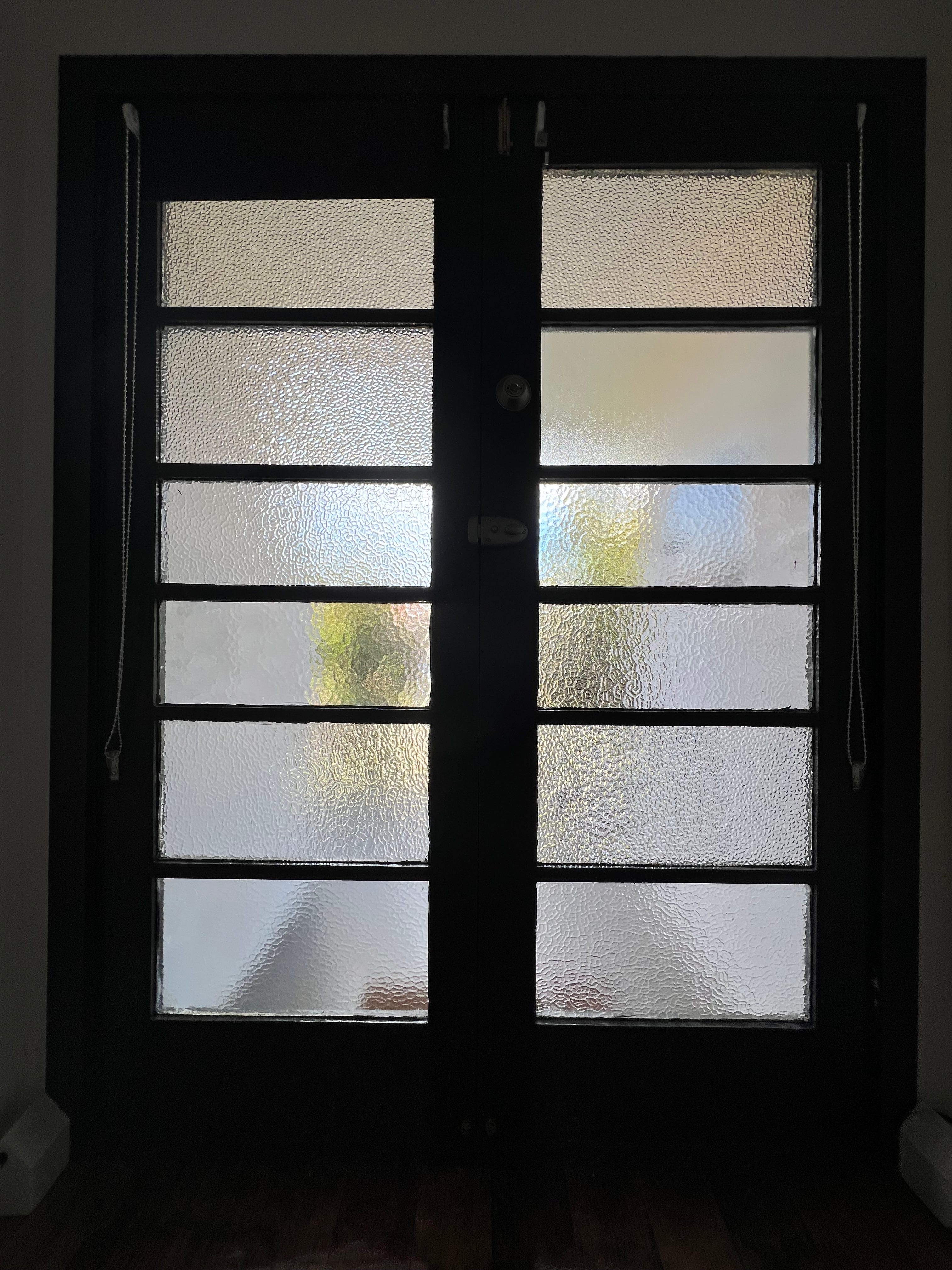
Approaching the 80-year-old art deco style front door an exquisite dance of light facilitated by the 12 panels of patterned and rippled glass gave Hart comfort. Leaving the familiarity of home, work, friends and family while jumping into the unknown, was however on his mind as he boarded the first leg of a flight to Barcelona. He felt good about having no expectations while safe and secure due to the meticulous planning over the previous 18 months masterfully orchestrated by his friend and travel companion. Take off on the large double-decker Airbus A380 aircraft was surprisingly smooth and hardly noticeable to Hartmut, in contrast to his first flight overseas in the 70’s when he was thrust against his seat with what felt like a G-force of significant size. So, it began.
What was waiting for Hart was a feast, a degustation if you like, not so much of food but rather what seemed like a parade of novel sights imbued with beauty and awe, mostly incomprehensible yet quickly snapped and shuffled into the cloud for future reminders, debriefing and understanding. Make no mistake, travelling through eight countries via planes, trains, ships, tour buses and taxis places challenges on the human body and mind yet the doorways passed through on the way evoked new lifetime memories and awakened interests in local culture and language, architecture, historical ruins, paintings and sculptures and the geniuses of history who created them. Ancient history literally came to life as the ground walked upon, the air breathed and the sounds heard offered a palpable experience. Every day was planned yet curiosity lead the way through each doorway.
A brief stopover at an art gallery and museum in Melbourne peaked curiosity and lead through an ancient Egyptian doorway where hieroglyphic texts revealed an image of a winged sun disk - symbol of protection by the sky god Horus with other images in discernible order reenforcing Egyptian love of order and hierarchy. This was a good omen for Hart’s almost 24 hr flight ahead even though the tablet that contained these hieroglyphs was used as part of an upright slab of stone to honour the deceased and marked this culture’s belief around 3750 years ago that death was a doorway, not an end. Upon learning this our intrepid traveller was reminded that indeed birth and death form the surrounds of a doorway that ushers in life, a life that is finite yet filled with unimaginable potential.
Then came Barcelona. Travel can be a festival for the eyes. Perception is a common human attribute and the processes behind it play out similarly in us all. Landing in Barcelona and spending nearly a week there allowed Hart to have a taste of aesthetic cognition, with the brain having to switch gears from passive viewing to active engagement. And it felt good, with a lot more to come. Even the shopping mall across from the hotel was a circular architectural masterpiece that had no comparison in the country where Hartmut resides. Walking distance and beckoning in plain view from our traveller’s hotel window was the National Art Museum of Catalonia. Stepping through the Museum’s front doorway accentuated a cognitive wonderland that many humans in 2025 travel and pay good money for. Hart was no exception.
Once inside, a massive cathedral type main hall opens revealing a domed roof with multiple archways containing recessed square panels and exquisite Catalonian colours of orange and rustic pale browns and creams. Light streams in through arched windows positioned on high while huge artistically adorned columns support the heavenly dome. It was impossible to take it all in and Hartmut slowly walked around the periphery of the large space several times, frequently looking up with no awareness of his body and mouth wide open. The hall opened into numerous art exhibitions showcasing Catalunya’s artistic heritage spanning 1,000 years. After architectural satiation our pair of travellers chose to explore the world-renowned Romanesque and Gothic collection of medieval art. Transitioning this doorway unexpectedly ignited interest in the workings of power and religion accompanied historically by an almost uninterrupted stream of very bad human behaviour. At the time however, Hart couldn’t comprehend the unmasked strangeness of what he was seeing.
Picture this. It is a painting. On the left of the painting sits a man dressed in a pointed turban and wearing a high quality long beautifully styled black robe with large fluffy cuffs. This attire covered his whole body except for his hands and face. He is seated on a slightly raised wooden platform inside a building with artistically decorated wall panels and geometrical designed floor tiles. His neck is covered in a red scarf while casually holding a long sheathed red sword in his left hand. His right hand, slightly raised, is controlling the ongoings in front of him like a conductor in an orchestra. He has the look of simultaneous disdain and enjoyment on his face as a group of well to do learned bearded men, all looking down, some possibly clergy, also in long flowing robes and head gear of different colours, seem to be trying to advise him, but he is not interested.
To the right and middle of this scene, the main event is unfolding. Two less ornately dressed men with long sharp beards and eyes intensely pointed at the conductor wait for his commands. Each holds a long stick with a sharp metal three-pronged end that has been inserted into the chest flesh of a young man tied to a wooded X, not a cross. He obviously represents a saint of sorts as he is only dressed in an under garment and has an ornate halo around his head while looking down, sad, but trying to remain composed. This painting is obviously a doorway to another time as it tells a story that at first glance by Hartmut, was incomprehensible and shocking. The skill of the artist to fantasticate the work is indisputable, allowing many souls and minds to question and look deeper. Which is exactly what Hart did and in so doing, without giving it a second thought, stepped through another two doorways, only to have his mind blown. Which is another way of saying his consciousness was imbued with learnings, uninvited, yet embraced, strengthening his footing on this earth at this time.
Hartmut had snapped thousands of photos on this European tour all the while trying to capture a scene, sculptor, architecture, living plant or indeed painting that he was drawn to, a bit like a squirrel collecting and hoarding nuts, not to be eaten immediately but stored away for later sustenance. To help digest and understand the above scene, Hart, like billions of people on planet earth in 2025, asked Ai. There are now several well-developed forms of Ai that can be prompted to give us answers. They all have strengths and weaknesses. At first the scene was described as the Martyrdom of Saint Sebastian, painted around 1400 to tell the story of a 3rd-century Roman soldier who secretly converted to Christianity and was sentenced to death using arrows by the prevailing authorities of the time – the man with the red sword.
All good, except that Hart couldn’t see any arrow marks in the unfortunate young man. Upon questioning a competing Ai, it was revealed that the artwork was part of a panel from an altarpiece: The Martyrdom of Saint Vincent on the Rack, also depicting a scene around 304 AD and painted around 1350-1370 by the Master of Estopany, an anonymous Spanish painter. Fascinatingly, this later Ai defended the previous Ai model by saying that “ChatGPT’s confusion is understandable because the painting shares a lot of themes with the Martyrdom of Saint Sebastian”. Exquisitely presented evidence by the latter Ai confirmed the painting’s identity and its captivating narrative.
In Hart’s search for meaning and truth upon entering the doorway of this painting, something happened that is common when a person’s psyche becomes focused and committed. It’s almost like the universe provides help and more depth in the form of congruent information that feels like a coincidence or synchronicity and for Hart it came in the form of another doorway that most humans on earth traverse daily in 2025. The art and doorway of Film. Again, coincidently, the making of films was promoted and encouraged in November 2025 by the Pope of the Roman Catholic Church in a world-first meeting at the Vatican with representatives of Hollywood’s artisans and producers.
So the synchronicity – a few weeks after returning from the European trip, Hartmut was watching a five-part 2025 documentary on Apple TV about the life and work of Italian/American film maker Martin Scorsese. The last episode highlighted an intense faith questioning film he made called Silence, depicting Jesuit priests sent to 17th century Japan by European clergy to convert the locals to Christianity. Like the Romans in 3rd century AD, the Japanese weren’t having a bar of it and proceeded to shut down the whole country for several centuries and began expelling, torturing and killing Christians, who were perceived a threat to the power structure and existing popular secular and religious belief systems of the status quo. The linking factor between our painting and the film is apostasy.
To apostatise is to renounce or abandon one’s religion or a deeply held belief or cause, and usually in public. Both the film and the painting used torture of a prominent figure of a religion or movement with the aim to break the individual, so they would renounce their faith in public, apostatise, and as a result act as a deterrent to other believers. Cruelly, the aim was not to kill them, as this would make them a martyr and have the opposite effect. By tying St Vincent to the wooden X, and not a cross, which is designed to execute and kill, intensifies the display of the saint’s superhuman faith and endurance. The artist is not painting a historical reenactment, rather the dramatic and famous legend of Saint Vincent, as it was told and retold to inspire faith. Hartmut wondered how much of this dramatic incitement to have faith was still happening in 2025.
Remarkably, this was only day three of a seven-week European tour with many more doorways arousing curiosity to come. One such doorway was mentioned earlier and involved a practice even older than any of the physical doorways in Europe, widely known about in various forms in 2025 yet poorly understood. Entering a doorway is meaningless if what is inside can’t be recognised and how it might benefit us and our fellow humans. The key word here is re-cognised and once this happens consistently with practice, things change profoundly for the better.
Our consciousness is where we live, every waking moment, every day, our whole life. It embodies everything we perceive, think about, remember, and feel and is amiable and sensitive to transformation based on where we place our attention, even for a short time.
Passing through this doorway is utterly simple to such an extent a baby can do it. However, by the time we’re adults, we’ve basically forgotten that what we’re looking for or needing to feel comes from within us. While travelling from hotel to hotel in Europe Hartmut was able to allocate about an hour each morning to such a practice, sitting quietly and focusing within, using simple techniques shown to him in 1981, that, put simply, focuses one’s senses onto what already exists within us.
The practice of passing through this doorway requires no religion or belief yet many differing cultures with their endemic religions and ancient texts dating back to pre 1500 BCE spoke of this and understood the importance of spending quality time getting to deeply “Know Thy Self”. In 2025 humans all over the globe benefit from simple practices of “going within”, letting go, no need to create, just feeling and standing stronger in the knowing, not belief, that what they are looking for is within them.
Yet feeling this unprovoked inner beauty often served to heighten the appreciation and gratitude Hartmut felt while taking in the sights on offer around him.
On one morning, after a gruelling previous day of a 10-hour guided tour through cobble stoned ruins, our pair of travellers decided reluctantly to cancel the tour trip to Florence due to fatigue. Florence was the home of Michelangelo, highly gifted sculpturer of David and painter of the Sistine Chapel in Rome. Unbeknownst to either of them, the trip to Florence would lead them through several doorways that would leave both full to the brim with lasting endearing memories. As Hart was standing looking out of their room window, he noticed a long line of buses below waiting to take them and other visitors to Florence for the day and with just 15minutes to go before departure Hart felt an upwelling of agency and gestured that maybe they should go. And they did.
To be clear this European tour in 2025 was as a tourist and our travellers saw attractions like Gaudi’s architecture in Barcelona, Leonardo’s paintings at the louvre and Michelangelo’s sculptures and paintings in Florence and the Vatican. And as a tourist, Hartmut paid attention. Installed on many marvellous buildings all throughout Europe Hart saw an unusual amount of very large doorways made of wood, iron and bronze designed to let through horses, not just people, while visually revealing prestige and power of the owners, literally at their front door. Architectural and artistic masterpieces in Europe act as doorways into history with recurring themes of Christianity, particularly in Italy.
In Florence our travellers saw the famous seventeen-foot-tall, three-ton gilded bronze doors created between 1425 and 1452 by Lorenzo Ghiberti, working for 27 years on what Michelangelo himself called the “Gates of Paradise” because of their shear majesty and beauty. Importantly you get a glimpse into the mind and soul of the artist as their creativity tries to express something divine rather than just follow directions from their commissioner like a powerful official, ruler, statesman or indeed oftentimes, the Pope. In 2025 over 16 million people will probably visit Florence and Rome will attract more millions as it is the 25-year jubilee religious celebration.
So much more to say but let’s finish with The Vatican. Our pair went twice, once for the architecture as viewed from the outside and another for the art on the inside, with each, both metaphorically and literally, having a different doorway to enter through. Due in part to its sheer size, it’s also called Vatican City. Hartmut arrived just near the end of the recurring 25-year jubilee celebrations at the Vatican that coincided this year, 2025, with the election of a new Pope and portrayed rather accurately via the recent film Conclave. Once inside, the size of the space and the amount of artistry on display becomes both overwhelming and exciting. Like most people he heard and seen pictures of the Sistine Chapel and its recent functional role as the site of the Papal Conclave.
Europe provides numerous places of Christian based worship in the form of Basilicas, Churches, Cathedrals and Chapels with the difference between these primarily relating to their ecclesiastical status, purpose, and relationship to the clergy hierarchy, rather than strictly their architectural style or size. Off course Mosques, Synagogues and Temples are also available for worship and gatherings in Europe albeit in lesser numbers. Each one offers solace and quiet for weary travellers often accompanied by a consciousness expansion and feelings of humility and deeper reflection, in part facilitated by the very high spires, decorated ceilings and filtered light beaming in from above through stained glass windows.
Yet things are changing in 2025 as an emerging practice throughout the world and back home in Tasmania, Australia, Hartmut often has a morning coffee and breakfast at a converted chapel that retains the high ceilings and ornate windows and called simply, The Chapel, with an A-frame sign out the front each morning with a different message clearly articulating daily reminders that coffee is indeed well integrated into modern Western culture and also has some pleasing effect on our consciousness.
Back to the Vatican and it seemed like every square inch of the walls and ceilings was covered in art of some kind. Our valiant tourists made their way through long corridors and doorways to the most ornate rooms of the Vatican museum, all the while aware that time and energy was finite in this infinite parade of art and that the end of this walk of unknown length would culminate at the Sistine Chapel. Every now and then as the hours rolled by, Hart would ask one of the security guides how much further to the Sistine Chapel. “Oh, just ahead and turn left” was the standard reply, that after another few times and hours past, became almost humorous as a continuous parade of unidentified and contextually void art began to overload and lead to a kind of non-alcoholic drunken fatigue in our two travellers.
Finally, Hart passes through a doorway and arrives in the largish hall of the Sistine Chapel with Michelangelo’s art on the roof and one whole wall, portraying interpreted images from the bible’s Book of Genesis commissioned by Pope Julius II in 1508. Having witnessed the 17-foot perfect sculpture of David, carved out of a single piece of marble without a single mistake earlier in Florence, some context this time was at hand. This context helped ignite deeper curiosity and Hart wondered when looking straight up why Michelangelo portrayed one of the panels with a mostly nude man with his arse pointing out at the viewer as if giving the finger up gesture to some authority.
Indeed, even though these “back parts belong to God”, this is just one of the several interpretations of this painted panel, with another hinting at a rebellion if you will, against the authority of his commissioner, Pope Julius II. This is what happens when you pass through the doorway of viewing a painting. What is seen is in part what was intended and conscious in the mind of the artist but also, like all art, portraying a yearning, a questioning, an unconscious eruption of a truth and as a result interpreted uniquely by each viewer. Which leads us to one other panel at the centre of the Chapel’s ceiling, a doorway into the Zeitgeist of Michelangelo’s time yet particularly relevant in 2025.
Picture this. A large panel on the Sistine Chapel ceiling near the centre. On the left a young naked man, with well-defined muscles and handsome physique sits and rests outside against a grassy ledge with a flowing river nearby, supported by his bent right arm while his left arm is casually outstretched and partially resting on the left knee of his raised left leg. His gaze is somewhat focused on his left hand with its relaxed fingers pointing mostly downward, perhaps admiring this part of his magnificently crafted anatomy. He may also be gazing into the distance at the same time with a hint of underlying intensity.
To the right of the same panel is an older man with defined musculature and distinguished long flowing grey hair, wearing a pink silk flowing gown. He seems to be supported by a dark reddish cloth acting as a type of buoyant object floating in the air. The man has his right arm outstretched with index finger raised straight ahead and pointing at the slightly raised finger on the left hand of the relaxed young man mentioned earlier. There are only several inches between his and the young man’s finger. The older man is looking intensely down at his or both the two fingers.
On the dark red flowing robe accompanying the older man are what looks like a young naked woman or man that the older bearded man is supporting and has his left arm around. Additionally, 11 young naked children, most of whom are staring intensely either at the young man or the space between the nearly touching fingers of the two men. One of the young people looks like a young man in suffering while another looks dazed and confused. A green flowing silk cloth trails in the air emanating from the floating group.
Without jumping straight into the obvious manifold interpretations of Michelangelo’s painting, let us ponder, if you will, other possible renderings of this work and in so doing allow other doorways to open.
The young man looks at his own magnificent body and wonders who he is and how he got here. Either culturally, instinctually or through psychological projection, he imagines his creator like him albeit older and wiser and wonders how to connect with him. He already knows his body will age and his life on earth is finite. Meanwhile the image of the older man he has created floating in air and compassionately taken care of the young and innocent and suffering, can’t realistically be reached except through belief.
Yet in the space between them lies a real possibility of connecting with what the young man is looking for although it doesn’t rely on belief or projection. This is the space that can’t be filled with imagination, it can only be experienced.
Unfortunately, like many times before, a repeating pattern, 2025 gave people all over earth another taste of very bad human behaviour as wars and political and religious polarization intensified in many places. And media only severed to amplify what was happening, leaving many of us almost numbed by the relentless stream of images and news, reinforcing that we just don’t learn from history. Yet deep down we want to prosper, be at peace and Hartmut, like many of us on planet earth in 2025, values a harmonious connection to other human beings.
Finishing a on a good note, the European tour gave Hart the opportunity to spend wonderful time with his aunty in Germany whom he had never met and only recently discovered existed thanks to her persistence and love. The meeting at her home, near where Hartmut was born and spent the first three years of life, opened a doorway to an old language that Hart had not spoken for more than 65 years. In 2025 google can translate a conversion in real time between two languages and Hartmut came equipped with a little speaker all set to go as his aunty only spoke German. Yet sitting at her kitchen table and trying to converse while fiddling and fumbling with technology, Hartmut suddenly found himself translating for his English-speaking friend what his aunty was saying in German. What a revelation and a wunderbar doorway to rediscover!
Thank you for your attention and may joyous doorways open for you.
Want more? To see more pictures?
Why Travel for Health
Having a career in human health makes it easy to spot the symbiotic intertwining of travel and health.
It seems a natural extension and progression from a career in health to also include travel. Incorporating travel writing and photography into my health career has only emerged in the last few years, unusual as I completed a professional photography course decades ago and writing has long been a smouldering passion. Yet travel and health are made for each other.
Of course travel begins at home. Getting up out of the chair and going outside where no two days are the same and plants, insects and birds beckon you to notice their unique daily interactions. Travel is essentially directed attention and movement.
Research consistently demonstrates that travel produces measurable improvements across multiple dimensions of health and well-being. Studies examining the psychological impacts of travel have found significant reductions in stress biomarkers, including cortisol levels, alongside improvements in mood states and cognitive flexibility. Exposure to novel environments — particularly natural settings and culturally rich urban landscapes — enhances creative problem-solving abilities and reduces rumination patterns associated with anxiety and depression.
The physical health benefits of travel extend beyond the obvious increases in walking and physical activity. Longitudinal studies, including the landmark Framingham Heart Study extension research, have found that individuals who travel regularly show reduced cardiovascular disease risk and lower all-cause mortality rates. Travel also promotes immune function through controlled exposure to novel microbiomes and environmental challenges — a phenomenon sometimes referred to as “adaptive stress” that strengthens physiological resilience systems.
Perhaps most profoundly, encounters with different cultures, landscapes, and historical sites facilitate what researchers term “self-transcendent experiences” — moments that expand one’s sense of connection to something larger than the individual self. Travel creates opportunities for identity exploration and transformation by temporarily suspending daily roles and routines, allowing for deeper self-reflection and the integration of new perspectives into one’s worldview and life narrative.
See our evolving & growing Travel for Health website for a parade of beauty and inspiration, showcasing travel both locally and abroad from Burnie to Berlin.